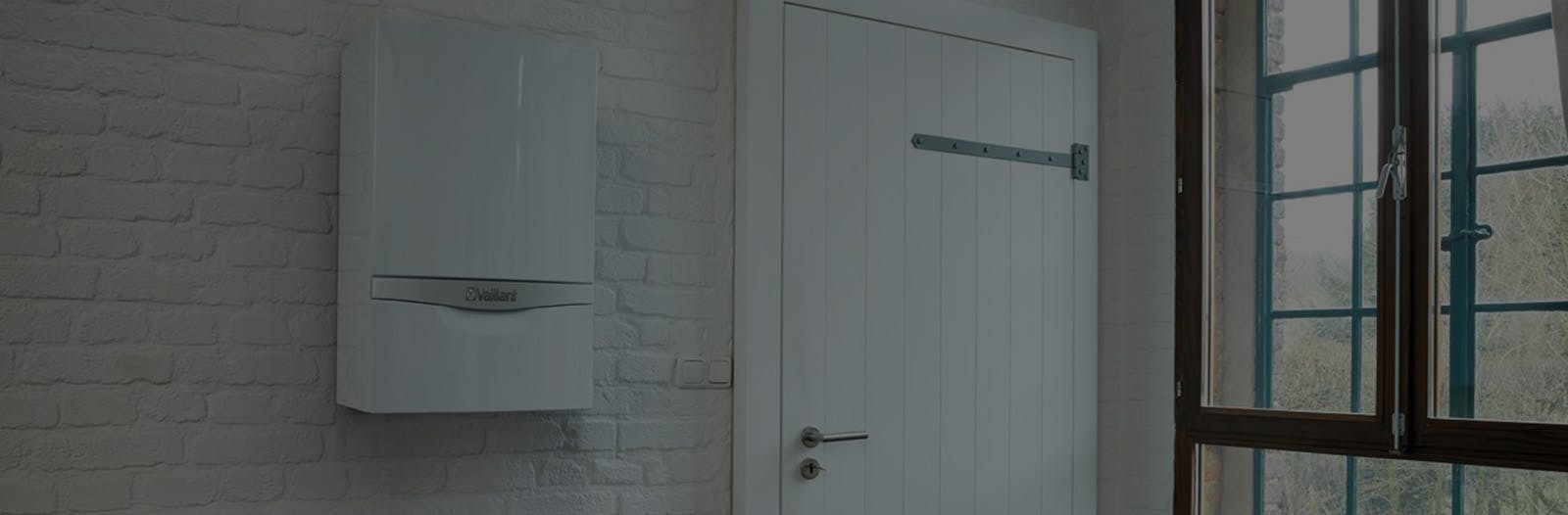
If your boiler pressure keeps dropping, it can be worrying and frustrating, especially if you are regularly topping it up. Understanding what is normal, what to check, and when to call an engineer can save you time, stress, and potential damage to your heating system.
Typical boiler pressure ranges explained
Most modern sealed-system boilers have a pressure gauge on the front. When the system is cold, the needle typically sits around 1.0 to 1.5 bar. This is a general guide and your manufacturer’s instructions should always be followed.
When the heating is on and the system is hot, the pressure usually rises to around 1.8 to 2.0 bar. A small rise is normal as the water expands with heat. If the gauge regularly drops below 1.0 bar when cold, or shoots towards 3.0 bar when hot, there is likely an underlying issue that needs attention.
Most common reasons boiler pressure keeps dropping
Low pressure is nearly always a symptom of water escaping somewhere or a component not managing expansion correctly. Below are the issues homeowners most often face, in a sensible order to think about them.
1. Small leaks on radiators, valves, or pipework
By far the most frequent cause of falling boiler pressure is a tiny leak on the heating system. This might be on a radiator valve, a corroded section of pipe, or a joint under a floor or in a cupboard. These leaks are often so small they evaporate before leaving a noticeable puddle.
Check around each radiator, especially the valves and the point where pipes go into the floor or wall. Light staining, flaking paint, rust marks, or a “green crust” on copper joints can all suggest a slow leak that will gradually drop the pressure.
2. Pressure relief valve (PRV) discharging water
The pressure relief valve is a safety device that releases water if the system pressure gets too high. It usually terminates outside in a small copper pipe pointing towards the ground. If that valve has lifted once, it can sometimes fail to reset perfectly and then drip constantly.
Look outside when the boiler is running and for a short while after it has been on. If you see water dripping or a regular wet patch under the copper pipe, pressure is being lost through the PRV and it should be inspected by a Gas Safe engineer.
3. Expansion vessel issues
Your boiler or system will have an expansion vessel that helps manage the natural expansion of water as it heats. Inside is a rubber membrane and an air or nitrogen charge. If that charge is low, or the diaphragm has failed, the pressure in the system can swing from very low to very high.
Typical signs are the pressure dropping when the system is cold, then rising towards the red zone when hot, sometimes triggering the PRV. Re-pressurising or replacing an expansion vessel is a job for a qualified engineer, as the boiler usually needs to be drained and checked carefully.
4. Recently bled radiators
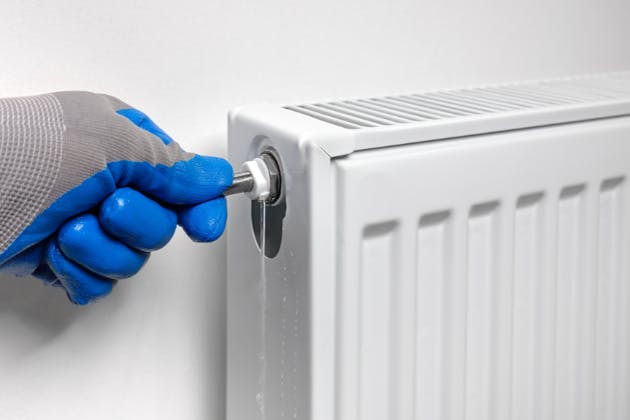
Bleeding radiators to remove trapped air is good practice, but it does release pressure from the system. If you have bled one or more radiators and not topped up the system correctly afterwards, the gauge may sit low or keep dipping.
Always check the boiler pressure after bleeding radiators and follow your manual’s instructions on how to bring it back to the recommended cold level. If it keeps dropping again after an initial top-up, there is likely another issue at play.
Check pressure when the system is completely cold, then again after the heating has been on for 20–30 minutes.
Walk around your home and look/feel for damp patches under radiators and exposed pipes.
Observe the outside copper PRV pipe for drips while the boiler is firing and just after it switches off.
Make a note of any error codes or flashing lights on the boiler display.
5. Filling loop left open or not closed properly
The filling loop is the flexible or fixed pipe used to top up the system from the mains. Once you have brought the pressure back up, the valves on the filling loop must be fully closed. If they are left slightly open, the system can over-pressurise while heating, then discharge through the PRV and end up low again.
If you are not sure which valves are which, or you suspect the filling loop has been incorrectly fitted, it is safer to ask a professional to check it rather than guessing and risking over-pressurising the boiler.
6. Internal leaks inside the boiler or heat exchanger
In some cases, the leak is not out on the radiators or visible pipework, but inside the boiler itself. A failing heat exchanger or internal joint can let water escape into the condensate trap or casing, slowly dropping the pressure.
Homeowners should not remove boiler covers or interfere with internal components. If you can hear hissing from the boiler, see staining beneath it, or notice water in places it should not be, turn the boiler off and arrange a visit from a Gas Safe registered engineer.
Safe checks you can do at home
There are a few sensible checks most homeowners can carry out without tools. These help you gather information and avoid unnecessary risk.
Look under each radiator for damp patches, swollen skirting boards, or discoloured flooring. Check the tops and sides of radiators for rusty marks, as this often points to tiny pinhole leaks that only weep when the system is hot.
Compare the pressure reading when the system is stone cold, then again when the heating has been running for at least 20 minutes. A rise of around 0.3–0.5 bar is common. Much larger swings can indicate expansion vessel or PRV issues.
Outside, observe the copper PRV discharge pipe while the boiler is firing and as it cools. Any sustained dripping, even if slow, is worth mentioning to your engineer. Never block or cap this pipe, as it is a key safety route for excess pressure.
Special considerations for Waltham Forest and Redbridge homes
In areas like Waltham Forest and Redbridge, many properties are Victorian terraces or 1930s semis with older pipework. Over time, buried steel or copper pipes can corrode from the inside, causing micro-leaks that are hard to spot on the surface.
These small weeps may be hidden under floorboards or in old plaster, so you may only see a slowly dropping gauge rather than obvious damp patches. In such homes, system water quality is particularly important to reduce ongoing corrosion.
Adding a quality inhibitor helps slow rust and sludge build-up, which can otherwise damage components and narrow pipework. In more heavily sludged systems, a correctly carried out power flushing process can improve circulation and help protect the boiler, although it will not fix an actual leak.
For older pipework, a Gas Safe engineer can advise whether targeted repairs, partial repiping, or ongoing monitoring is the best approach, rather than automatically recommending a full system overhaul.
Risks of constantly topping up boiler pressure
Regularly topping up the pressure might seem like an easy workaround, but it can quietly damage your system. Every time you add fresh mains water, you introduce more oxygen and minerals into the pipework and boiler.
Over time this can accelerate internal corrosion, create more sludge, and increase limescale build-up, particularly in hard water areas. That, in turn, can shorten the life of expensive parts such as the heat exchanger, pump, and valves.
If you find you are topping up the system more than once every few months, treat it as a sign that the root cause needs to be found and fixed, not ignored.
Carbon monoxide and safety considerations
Low pressure itself does not directly create carbon monoxide, but any boiler fault should always be treated with appropriate caution. A poorly maintained boiler, or one with internal corrosion and water damage, may be at higher risk of unsafe combustion.
Make sure you have a working carbon monoxide alarm in the same room as the boiler, installed according to the manufacturer’s instructions. If you ever feel unwell when the boiler is running, or your alarm sounds, switch off the boiler, ventilate the property, and seek urgent professional help.
When to stop troubleshooting and call a Gas Safe engineer
It is sensible to call a professional if the pressure drops to zero, the boiler shows a fault code you do not understand, or the system loses pressure again within days of topping up. Repeated lockouts or loud banging, kettling, or hissing noises are also red flags.
If you suspect an internal leak, see water from the PRV, or are unsure how to use the filling loop, do not keep experimenting. A qualified engineer can safely test the system, check for hidden leaks, and assess components like the expansion vessel and PRV.
Next steps: repair now, prevent repeat issues
If your boiler pressure will not hold, it is time to get it checked properly. You can arrange a local boiler repair visit with Beales Services on 02034880883 so a Gas Safe registered engineer can diagnose the fault and get your heating working reliably again.
To reduce the chances of the same problem returning, consider booking regular boiler servicing to keep expansion vessels, PRVs, and seals in good condition, and discuss system water quality and whether power flushing or inhibitor would benefit your home. Taking action now can protect both your boiler and your comfort over the long term.